
Originally published 2014 by Juan Uribe on iTDi.pro. Updated May 2026.
How can we channel the lovely energy young learners bring to class? How can language be lived in a caring and empowering way? How can we promote affect but still have control of what happens in class?
Affective postures and practices make a big difference when it comes to fostering empowering and democratic language learning environments with young language learners. Here I share some affective and effective strategies you can live to promote authentic student engagement in your class:
Creating Belonging: Welcome, Goodbye, and Circle Time
Create welcome and goodbye experiences for every class and for the course for you and your students to appreciate these moments and make sense of what they mean individually and as a group. Students can feel through these the meaning of being part of a group.
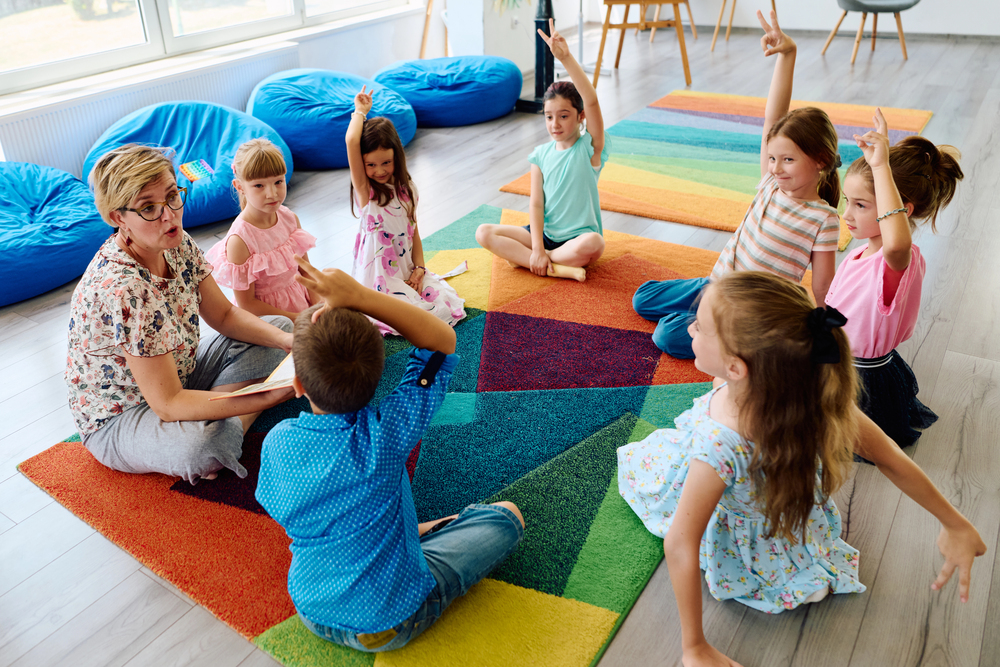
Establish Circle Time as a moment of communion in action in which students can bring out what is happening in their lives and can use language as a real means of communication to express themselves freely. This lively talk will not only acknowledge and validate students’ identities, but will also allow you to plan for relevant themes.
Setting Expectations Without Killing the Energy
Communicate expectations by having from three to five clear rules to be followed in class. Praise good behavior, allow time for transitions, and schedule individual attention to prevent discipline problems from happening. Pay also special attention to noticing and eliminating triggers that precede problematic behavior.
Give instructions one at a time. Model what you would like them to do. Ask instruction-checking questions or ask a student to repeat in his/her words what they are supposed to do. This might seem redundant, but clear instructions maximize success and make sure all students are on the same boat.
Using the Mother Tongue: When and How to Allow L1 in Your Young Learner Class
Allow students to mix English with their mother tongue in the early stages and help them say what they would like in English through modeling and shadowing. Have posters with frequent sentences on the walls to maximize language usage.
Giving Students Control: Activity Cards and Choice
Make the use of activity cards a routine to share the activities and the order in which these will happen during the class. Activity cards allow the group to control time better, get ready for transitions, and also to talk about the different activities that have been planned. Allow students to make choices on what, when, and how they would like to learn.
Building Rapport Through Humor, Kindness, and Play
Develop rapport by validating young learners with kind looks, having playful conversations, and talking about feelings. Listen and tell jokes as humor is a great way of connecting with young learners.
Keeping the Pace Alive: Variety, Movement, and Interaction
Create a stimulating pace of instruction by providing a rich variety of learning moments. Alternate easy and difficult, quiet and loud, individual and collective, seating and standing, free and structured.
Use a bell, chimes, clackers, or a rainstick to avoid having to shout to call students’ attention. You can also say “if you can listen to me, clap” and clap until the whole class is clapping with you.
Make your classes interactive by asking questions, giving students tasks, telling them to share in pairs. Make language concrete through visuals, movement, and realia.
Activating Prior Knowledge and Validating What Students Bring
Ask what students already know about a new theme before starting it, as it allows them to share their knowledge and to promote discussion within the group. Validating our young learners’ knowledge is essential to activate mental schemes and to promote significant learning.
Recognising Effort and Making Learning Visible
Recognize and acknowledge student effort and achievement by hanging their work, having a class journal, taking pictures, giving positive feedback, and celebrating their learning. Share all these with the school community and with their parents.
Engage students in different creative ways to reflect, evaluate, and self-evaluate behavior, cooperation, language use, and learning. Record and organize these in a class journal in order to show how their critical thinking has evolved.
Teaching Less Is More: Making Room for What Matters
Plan to have time left to talk about interesting experiences that students would like to share and discuss. Remember these are valuable moments and that you not teaching your class plan, but you are teaching young learners. Teaching less is more.
Be present, honest, spontaneous, consistent, compassionate, and real.